Showing posts with label Midcentury churches. Show all posts

Monday, April 16, 2012

Church of St. Luke

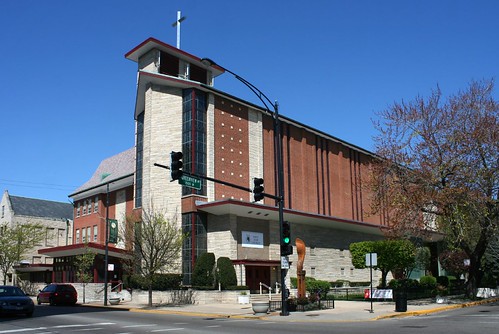
Inner city Chicago is not the best place to hunt for grand Mid-Century architectural statements. Nonetheless, at 1500 W. Belmont, just east of Ashland, you'll find one of the region's most fantastic post-war churches.

IMG_6133a

Ground was broken for the Evangelical Lutheran Church of St. Luke in April 1959 after two years of planning, and the building - designed by Chicago architect Charles A. Stahl - was dedicated in October 1960.

The St. Luke campus has a complicated history. The congregation has met at this location since its founding in 1884, originally in a fairly stock brick Gothic building with a central tower. In 1905, a new school building was erected next door. Though the school building retained its original facade when the new sanctuary went up, subsequent additions and alterations have rendered it almost unrecognizable.1.

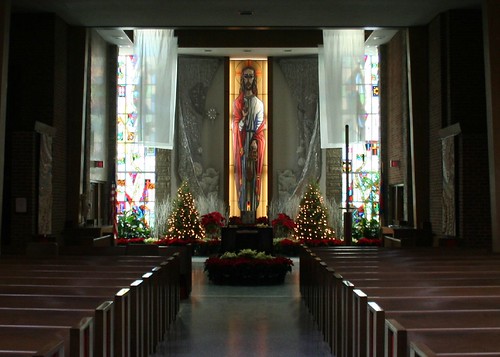
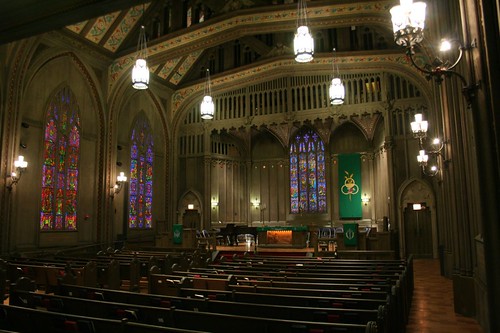
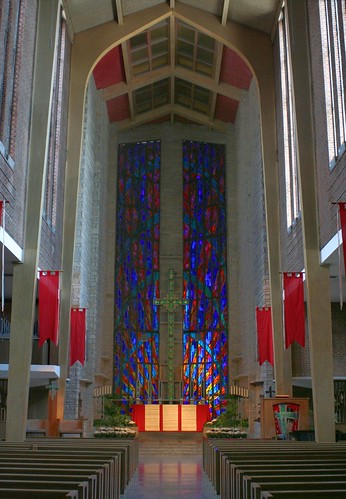
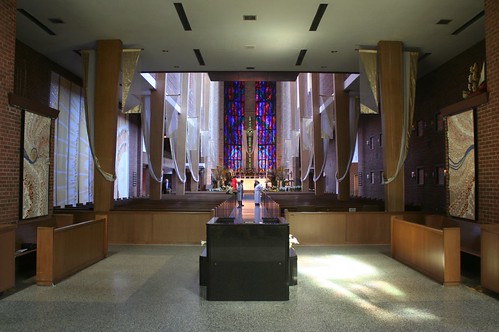
The 1950s church bears what might be a trace of Frank Lloyd Wright's ubiquitous influence - but St. Luke is indisputably a vertical building - soaring as any Gothic cathedral, tall and narrow within. Long wood laminate beams rise straight up, turning at their top to support the shallow gabled ceiling.
IMG_5965a

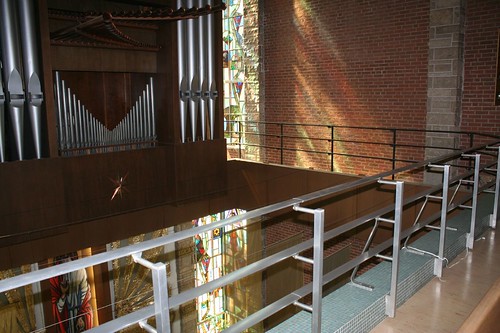
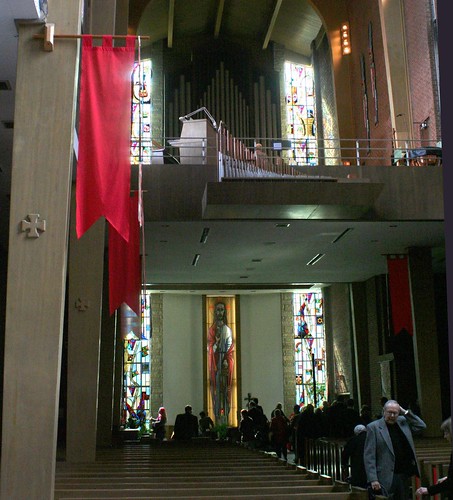
The choir loft is a balcony in the form of a bridge at the rear of the sanctuary, spanning between the walls and supported only on the sides. This enables the back of the sanctuary, behind the balcony, to function as a grand foyer, connected to the main space but somewhat separated from it as well. This foyer space is as tall as the main sanctuary.
IMG_5944a

IMG_6229a

IMG_6237

A second balcony functions as the children's choir loft; it is a small room on the west side of the sanctuary overlooking the altar.

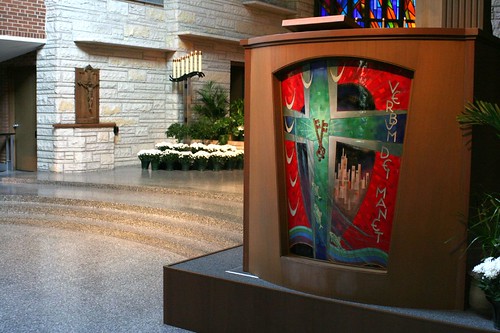
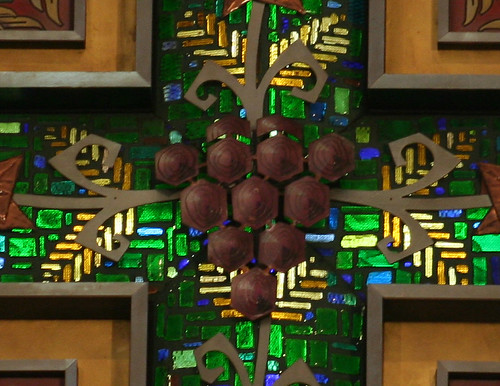
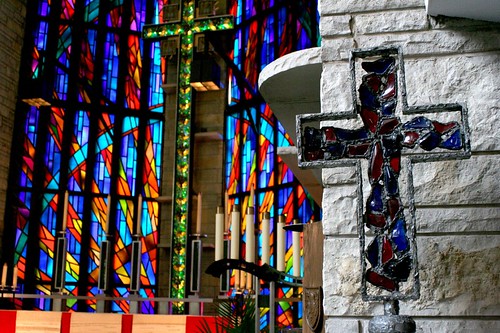
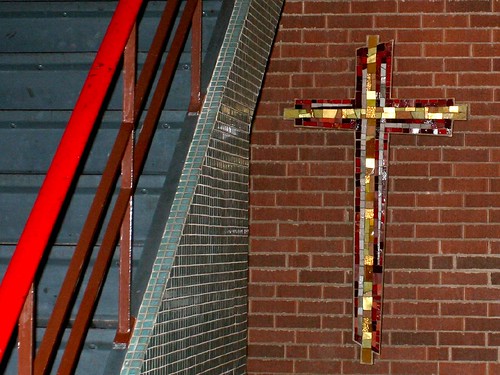
The Church of St. Luke is wonderfully artful - literally. The congregation holds a substantial art collection - and the sanctuary features both permanent and seasonally rotating elements that complement and enhance the space. Some of the more permanent elements are shown below.
IMG_5974a

IMG_5969a

IMG_5951a

IMG_5183a

IMG_6198b

IMG_6011a

Stained glass

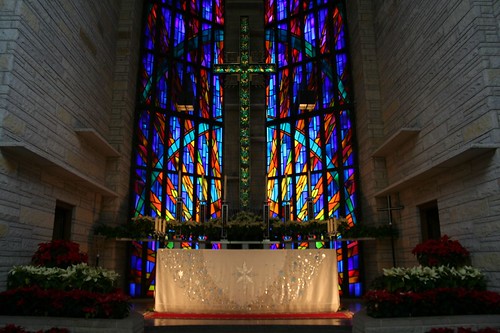
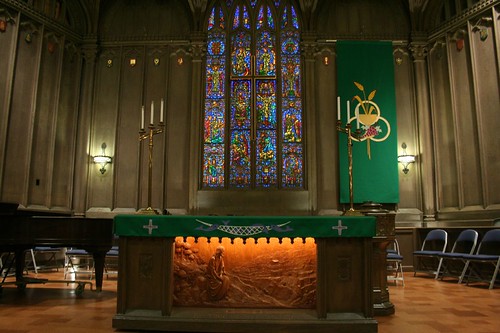
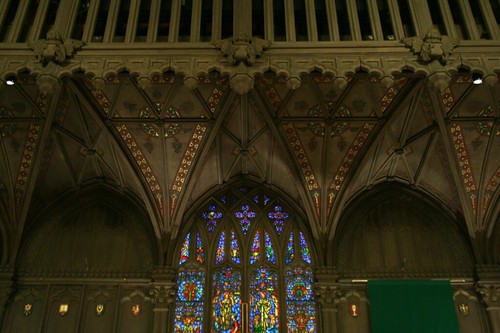
The stained glass is strategically concentrated. A grand burst of rising waves of color emerges from behind the altar at the head of the sanctuary, bringing the space to its dramatic climax.

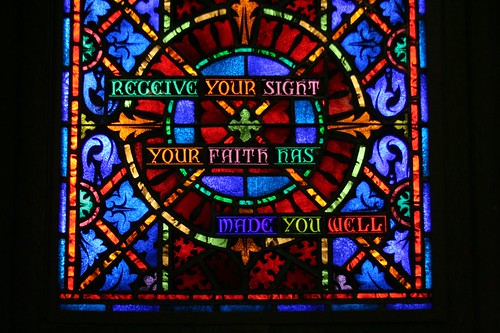
At the back of the church, facing south onto Belmont, the corners of the building are wrapped by tall, narrow windows with biblical and saintly symbols with two vines making their way sinuously skyward.
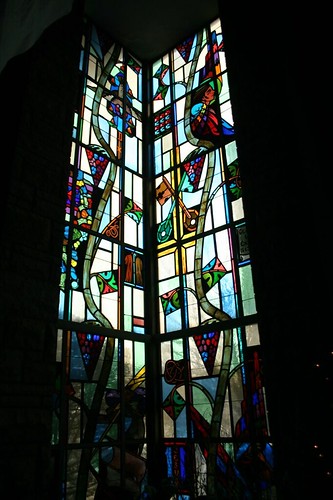
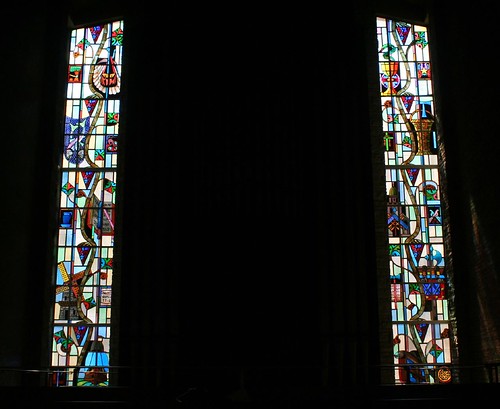
Stained glass

IMG_6235a

I have not found any notes on who designed or installed the stained glass - not even a signature.

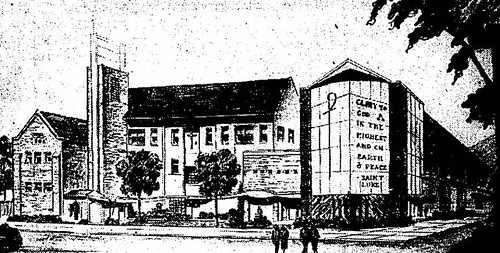
An interesting postscript - the preliminary design of the church was much less ambitious, as shown in an illustration from the Chicago Tribune of March 10, 1957:
evangelical-lutheran-church-of-st-mark-preliminary

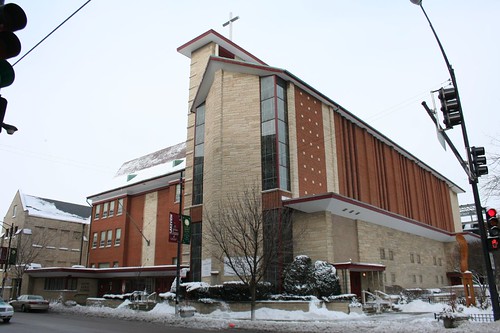
Between concept and execution, the tower was joined to the sanctuary (and now contains the stairwell leading to the balcony, as well as some dressing and storage rooms for the choir). The overall design became more sharply vertical, the materials of the shield wall in front changed from flat panels to rough-faced stone masonry, and the large text was dropped.
IMG_5194

Monday, October 3, 2011

St. Priscilla Catholic Church
IMG_7916

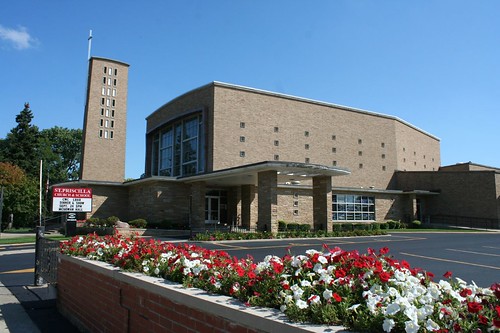
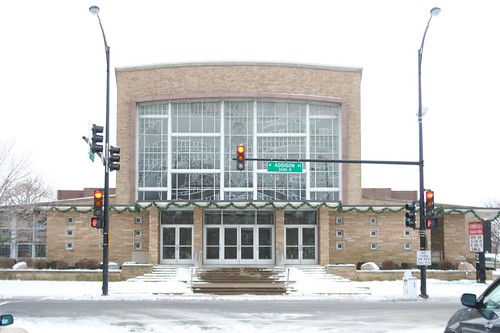
It's nothing mind-blowing from the outside, but if you know how to read your MidCentury vocabulary, you can tell there's going to be great things inside. St. Priscilla Church (6949 W. Addison, 1957) does not disappoint.

Chapel hallway

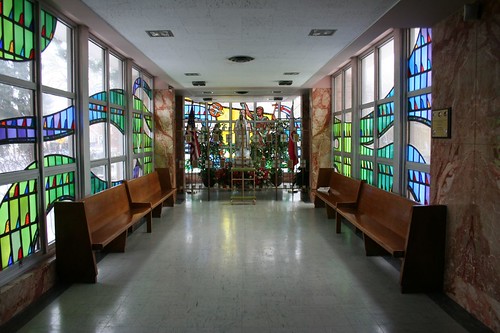
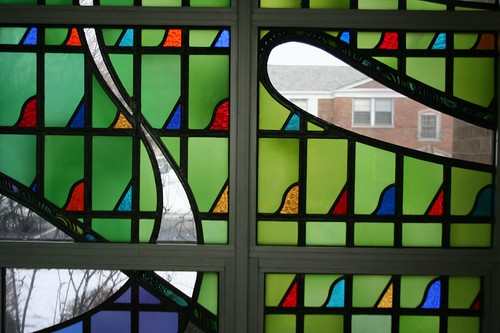
The entry hall is a long, narrow rectangular space, which extends beyond the main body of the building to form the baptistry, demarcated only by gates. This thin structure has walls of stained glass on both sides, with bold, flowing abstract designs that alternate large areas of clear glass with color.

Stained glass detail

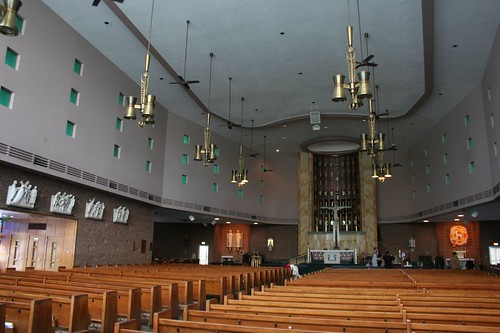
The sanctuary is a large space, with high flat ceilings and walls adorned only by flecks of light (an approach used in St. Louis at St. Catherine of Sienna church, among others.)

Sanctuary

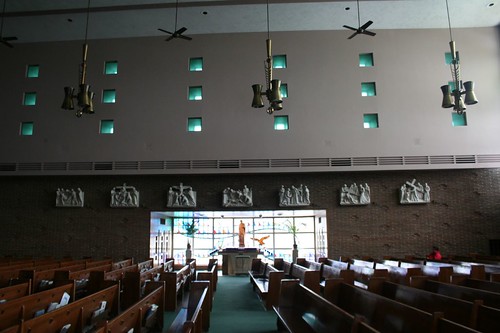
Side wall

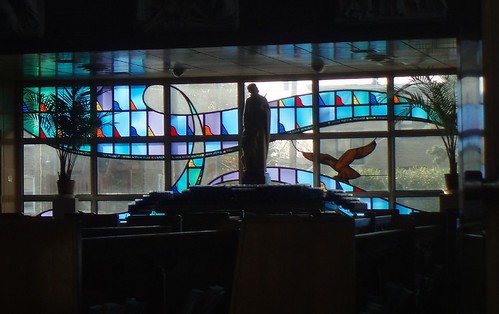
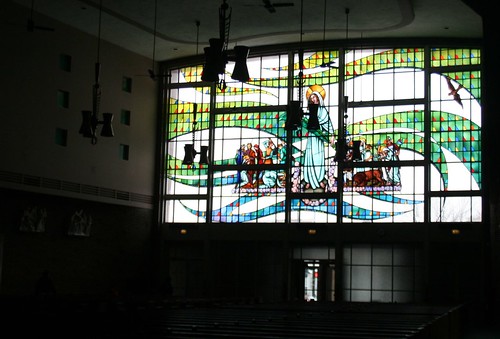
Below, the stained glass windows continue the same sweeping wave-like forms seen in the chapel.

PB045885a

And the motif culminates in the rear window, where Saint Priscilla herself presides over the sanctuary.

IMG_3447a

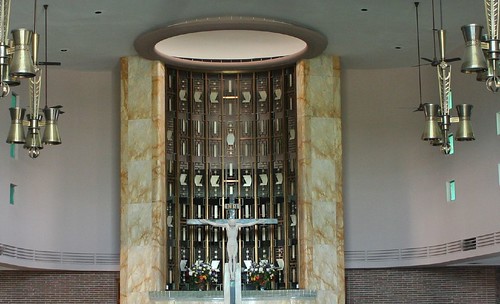
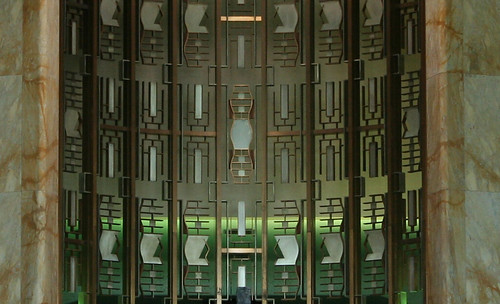
Behind the altar, a massive metal screen rises up to a round skylight.

IMG_7948a

IMG_7958a

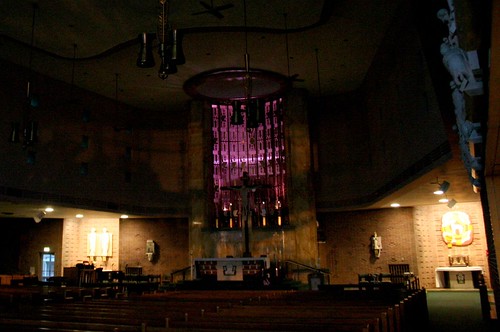
The sanctuary can be a rather moody place, depending on the time of day and how many lights are left on. But it is always beautiful.

IMG_3685a

The siting of the church lends it additional presence - it sits at the head of the T-shaped intersection of Addison and Sayre.

From the north

A school and newly completed convent already stood on the site in 1956, when Rev. Aloysius Hinterberger led the drive for a new building. Fund raising for the church building began based on a budget of $750,000 (later upped to $900,000). The new building was constructed by Charles B. Johnson & Sons, the general contractor. The new structure was dedicated on Christmas Eve, 1957. Among it better known congregants was builder Albert Schorsch, who developed large swaths of northwestern Chicago.

Today St. Priscilla Catholic Church provides Mass in both English and Polish.

  • St. Priscilla Church site
  • Monday, September 20, 2010

    Chicago's Holy Corner

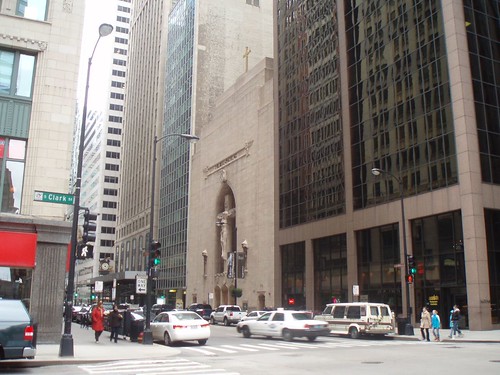
    From the downtown intersection of Clark and Madison, you're within a two minute walk of a Catholic church, a Protestant church, and a Jewish synagogue. And all three are well worth the visit.

    First United Methodist Church (The Chicago Temple)

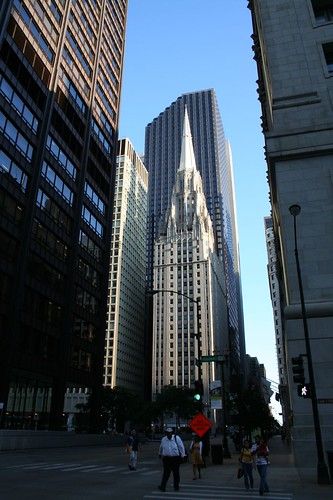
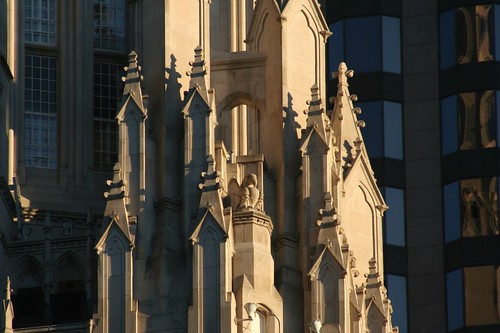
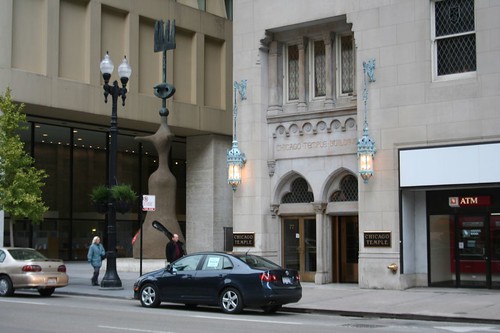
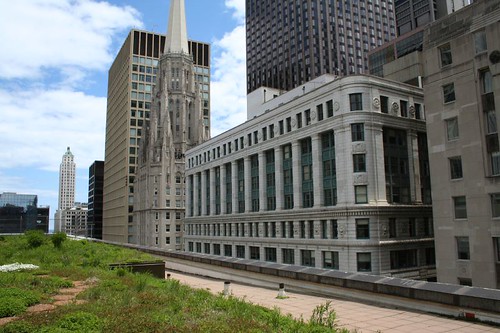
    The Chicago Temple is the tallest church building in the world, and the only skyscraper in Chicago with a religious spire. It's a 1922 design by architects Holabird & Roche, in a French Gothic style. When it opened in 1924, it was the city's tallest building.

    IMG_4775

    IMG_4849

    IMG_0794

    At ground level, the wood-lined main sanctuary is open for most or all of the day; you can wander in just about any time for a look. (Being downtown, that means there's sometimes a few homeless folks hanging out in the colder months, though the forbidding entrance lobby with its security guard makes it a bit uninviting.)

    IMG_0776

    IMG_0752

    Those stained glass windows are an illusion - there's no trace of them on the outside of the building, and they remain brightly illuminated day and night.

    IMG_0754

    IMG_0771

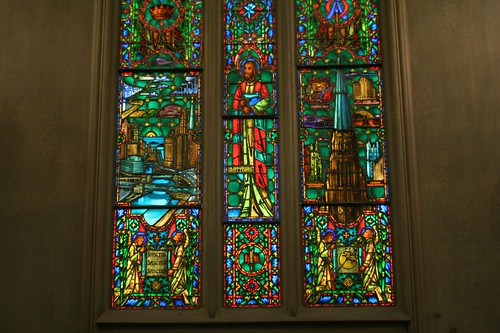
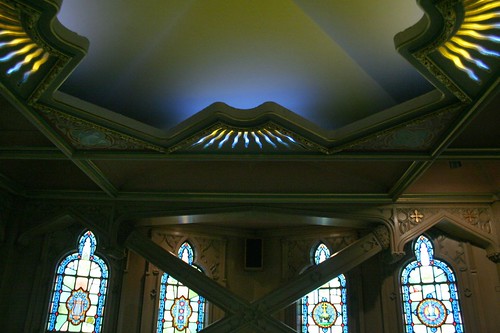
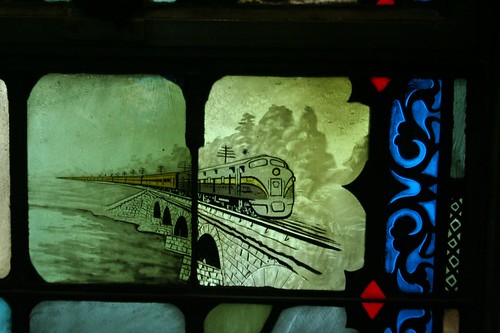
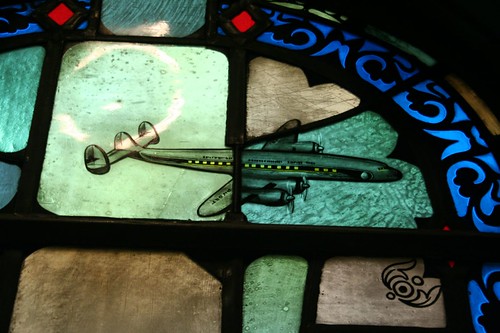
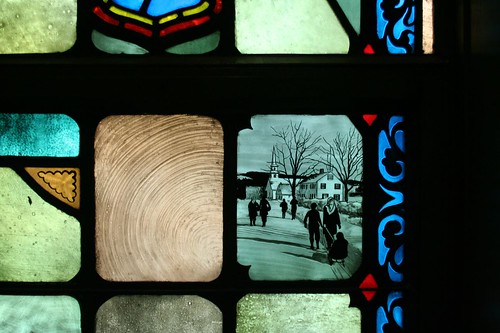
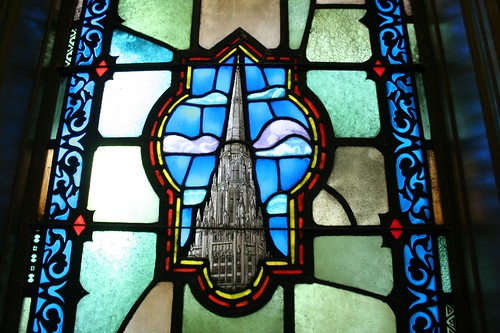
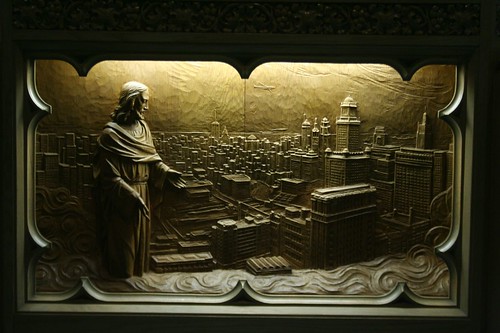
    The stained glass is done in a traditional style, but with some contemporary subject matter, including Jesus blessing the skyline of the city and the highrise itself.

    IMG_0748


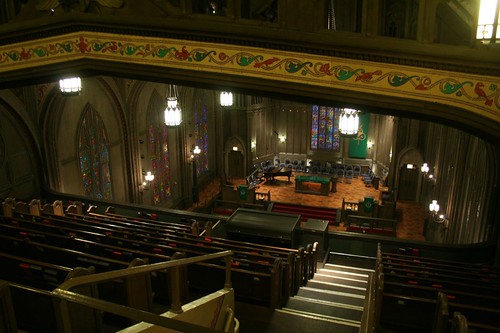
    The sanctuary reaches some impressive heights, particularly when you consider the load of an entire skyscraper is carried above it.

    IMG_0715

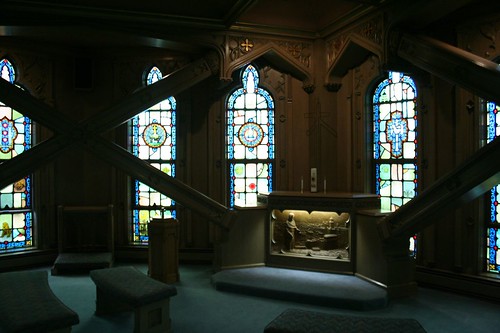
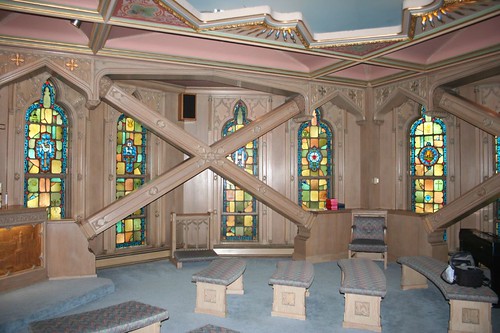
    But those heights pale compare to those of the Sky Chapel, just below the spire.

    IMG_0721

    IMG_0730

    IMG_0720a

    Long-planned, the chapel wasn't fitted out until 1952, when a bequest by the widow of the founder of the Walgreens chain made it possible. Despite the changing times, the chapel is fairly conservative in style - though the stained glass continues the theme of bizarre subject matter begun in the sanctuary below.

    IMG_0731

    IMG_0733

    IMG_0734

    And once again, just in case you forget where you are...

    IMG_0732

    IMG_0725

    City Hall's green roof


    Chicago Loop Synagogue

    PB166306

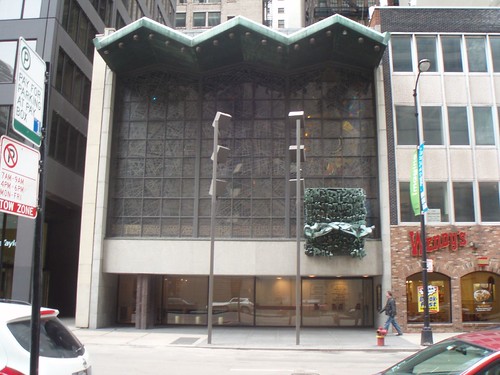
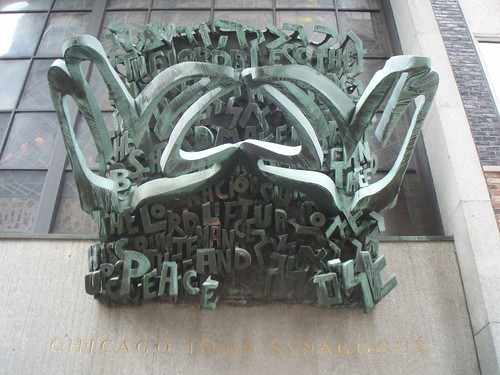
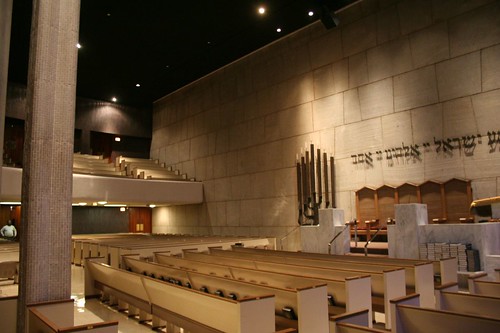
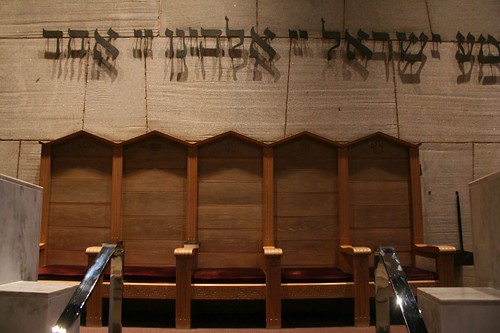
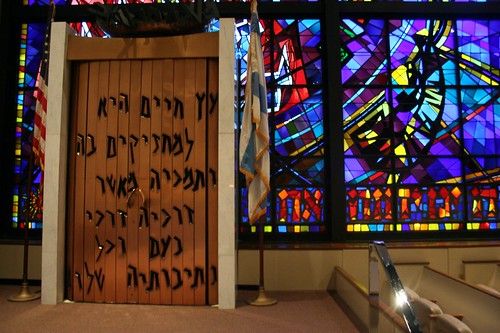
    This Midcentury confection is slotted neatly into the street wall. Designed by architects Loebl, Schlossman and Benett in 1957, the Loop Synagogue opened its doors in 1958. The building is adorned by a 1969 sculpture entitled "The Hands of Peace" on the outside, by sculptor Henri Azaz, with stylized hands against a background of Hebrew and English letters spelling out a traditional Jewish prayer.

    PB166303

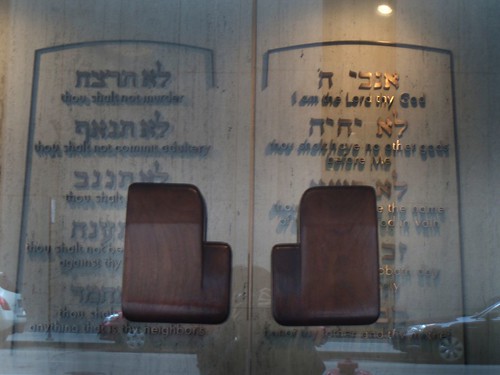
    There's a sort of slow, deliberative elegance to this building. You can almost feel the architects pausing contemplatively, stroking their chins in thought perhaps, before finally selecting these wonderful huge wood door paddles.

    PB166301a

    Beyond those doors lies a simple passageway with offices and other spaces. The main worship space is on the second story.

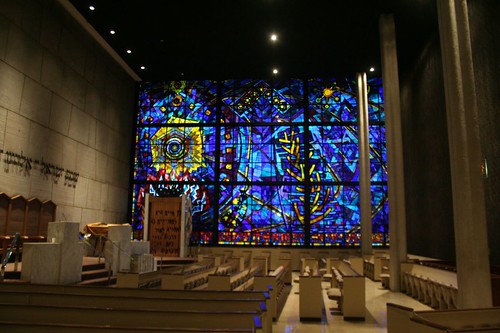
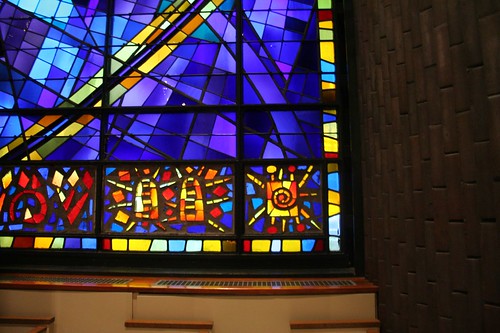
    The beautiful wall of stained glass was designed by American artist Abraham Rattner and installed in 1960. Based on the "let there be light" Torah passage, it depicts an abstract, metaphysical cosmos flecked with ancient Hebrew symbols.

    IMG_7099

    IMG_7103

    The rest of the space is spare and clean, befitting its Modernist origins.

    IMG_7105

    IMG_7109

    IMG_7107


    St. Peter's Church

    PB166307

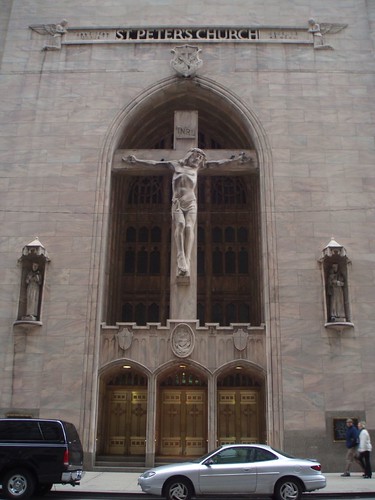
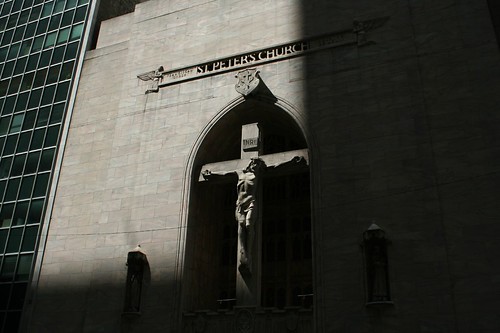
    Wedged between two adjoining buildings, St. Peters Catholic Church gives the impression that it was carved out from a solid rock face. Solid, planar walls contrast startlingly with deeply hewn entrances and window openings, creating one of the best facades in the city. Unlike the contemporaneous Queen of Heaven mausoleum, this 1953 church (architects: Vitzhum and Burns) shows a mix of modern and historical influences.

    A three-story high crucafix by Austrian sculptor Arvid Strauss completes this compelling composition.

    PB166312

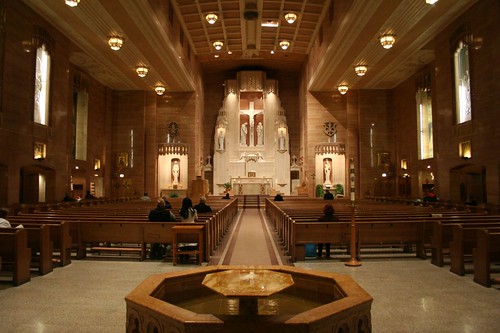
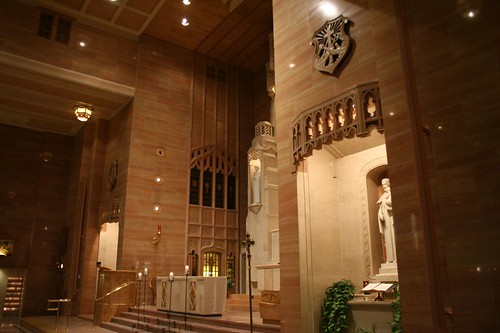
    Like the Chicago Temple, the doors of St. Peter's are always open (again, meaning there's usually a few homeless guys hanging around, along with a smattering of curious tourists and the usual downtown office workers.) The space inside is vast, befitting the epic facade outside. Seemingly every surface is gleaming polished stone.

    IMG_0663

    IMG_0659

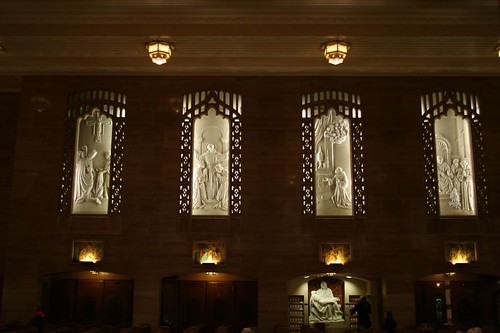
    Deprived of natural light, the designers had to turn to other tricks to give the space a sense of holiness. Illuminated sculpture niches serve in place of stained glass windows, portraying the life of St. Francis of Assisi.

    IMG_0665

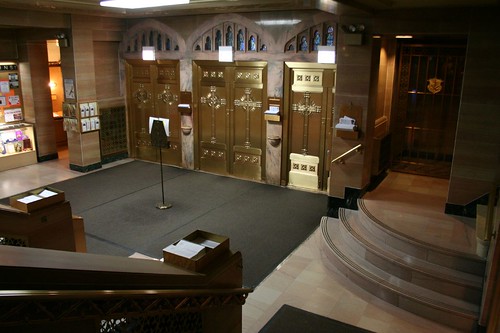
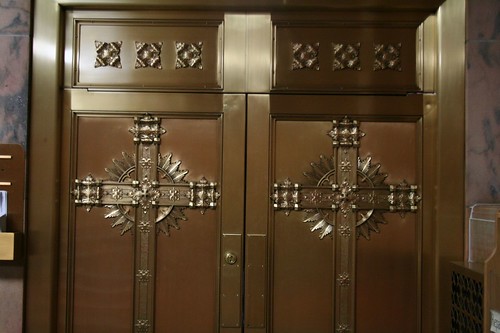
    The building's lobby is notable primarily for its wonderfully ornate doors.

    IMG_0673

    If you've walked past this place, take five minutes to duck inside. It's well worth the time.

    IMG_0675

  • A history of the church from Heavenly City at Google Books.

    IMG_0296
  •