Showing posts with label Commercial strips. Show all posts

Monday, April 9, 2012

Mexican Grocery Store signs

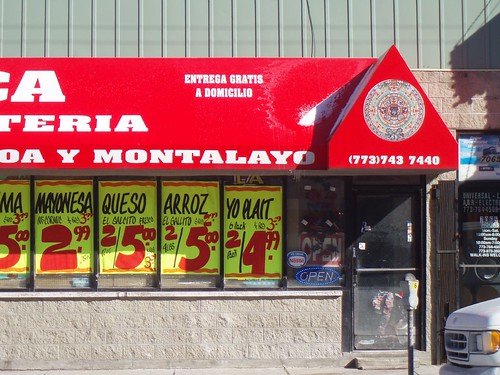
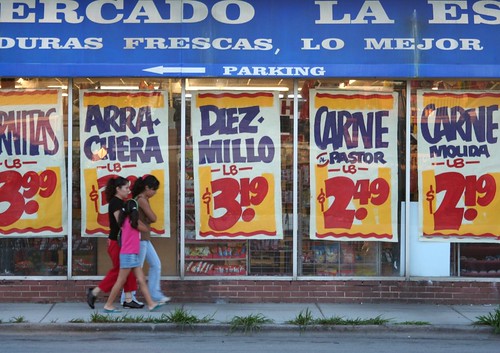
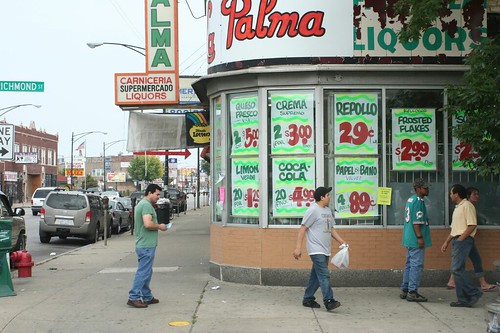
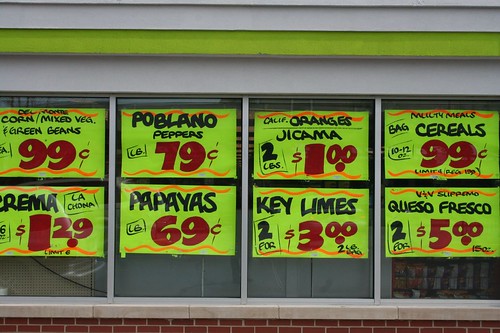
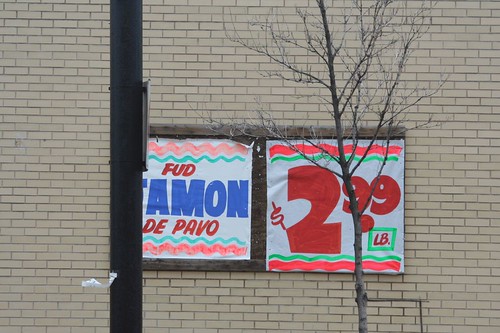
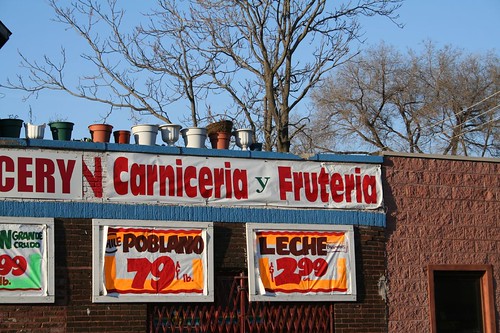
They come in a rainbow of colors (mostly neon, entirely bright), and you can find them all across the city, from Pilsen and Little Village to Logan Square to Rogers Park.

Pulaski grocer
Near West Side

IMG_4637

IMG_2803
Little Village
P2203063
Rogers Park

Chicago has tons of Mexican grocers - there are three within a block of my residence alone - and a disproportionate number of them advertise with signs just like these.
IMG_7911

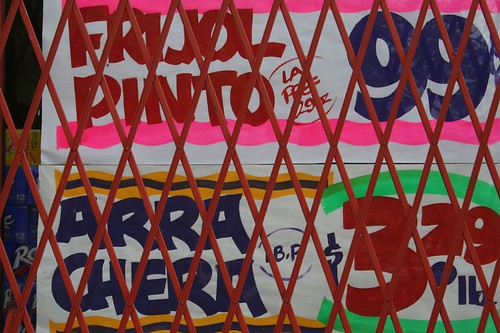
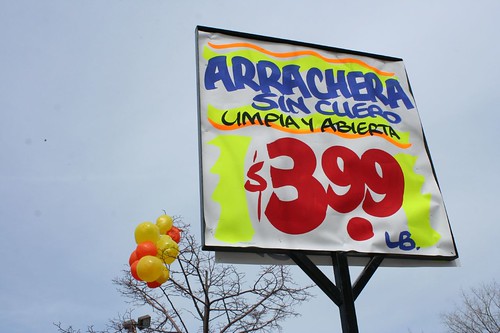
The style is universal: wavy lines top and bottom, in bright neon colors. Huge blocky numbers for the price, in red. Smaller font for the letters, but still in a bouncy, informal, chipper mood.
IMG_2839

IMG_8863

Like the builder's Mid-Century style, it's one of those cases of curious convergence. A quick chat with our local grocer reveals that they get them from varying places, sometimes making them themselves, and sometimes hiring guys to do it. I've seen the stamps of at least two different sign makers on these posters, though most of them remain anonymous.
IMG_2802

Why are they all the same style? Is it demanded, expected, or simply unexamined? Does it relate to some deep cultural strain, or is it just a thing that is?

Monday, November 29, 2010

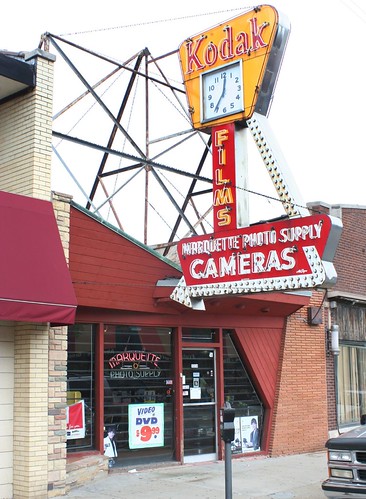
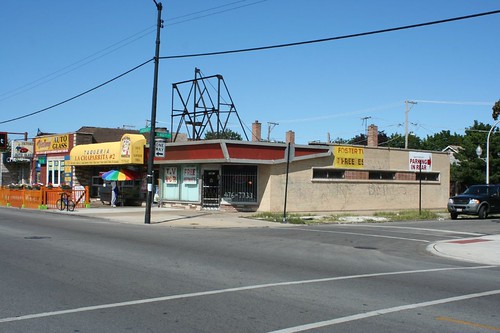
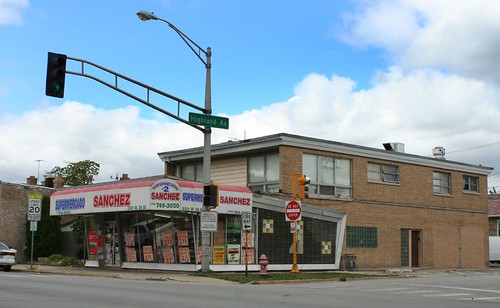
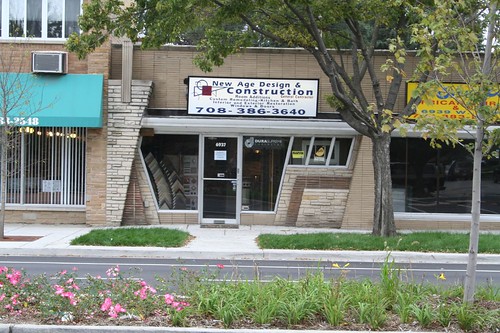
Mixed Use Midcentury

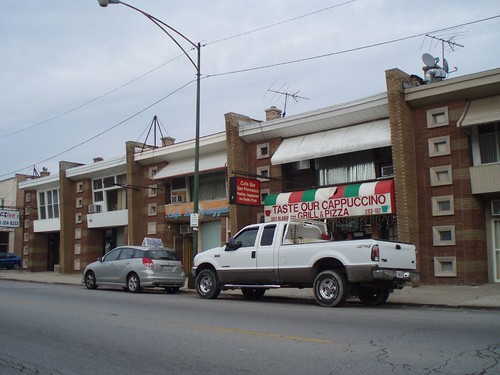
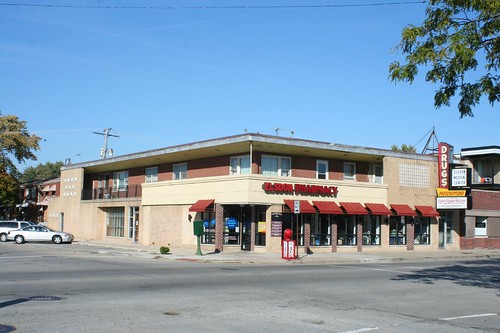
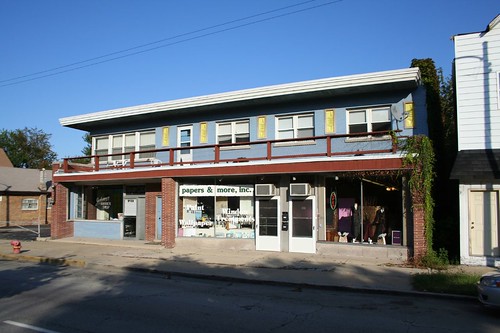
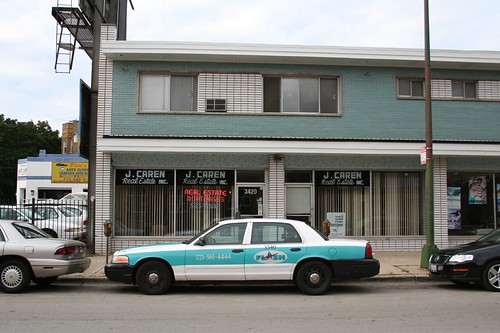
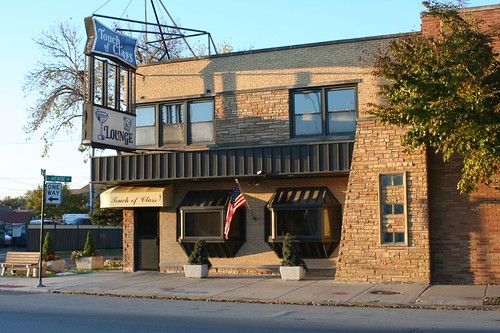
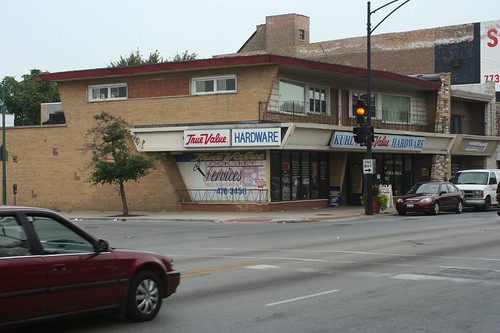
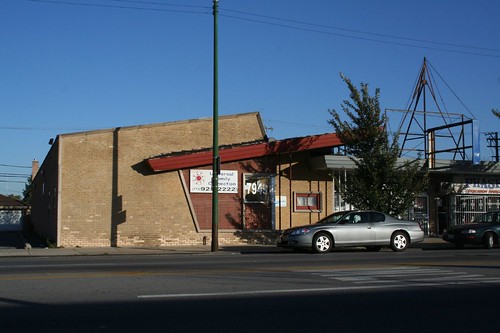
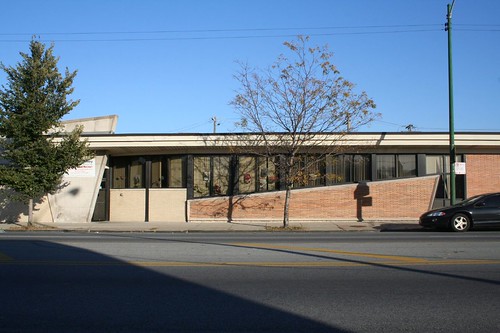
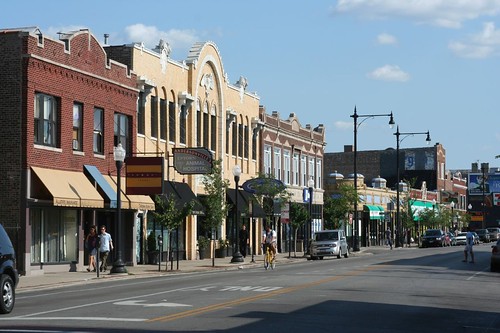
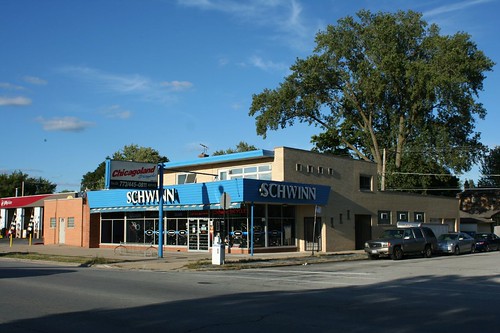
New Urbanists like to make a fuss over the notion of a mixed-use building, touting it as a revival of a long-lost art. While the basic, common-sense notion of people living and working in close proximity certainly did fall out of favor in the 1960s through the 1980s, it never really vanished entirely. And at the height of the 1950s suburban building boom, small-scaled mixed use was actually surprisingly common in Chicago's southern and western neighborhoods.

IMG_6049

PB025505
Harlem Avenue

IMG_0847

IMG_8878
Main Street, Skokie

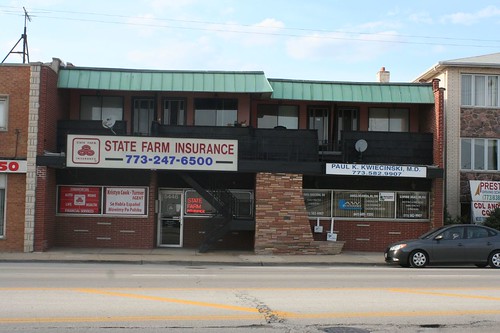
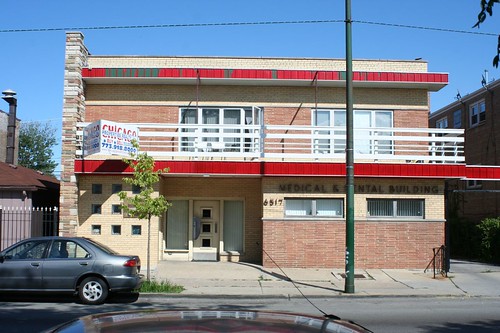
"Mixed-use" generally implies some combination of office, retail and residential, and that's generally what you'll find on these commercial buildings. Some feature apartments above storefronts, with generous porch space marked by wood or decorative metal railings.

4101779039_4f81c2dcd6_o

IMG_7999
Cermak Avenue

IMG_3200

IMG_0328
Western Avenue - more photos here

Others feature upstairs space of a less clear nature. Behind those walls could be office space, either separate or joined with the retail space below, or living space.

IMG_6746
Bryn Mawr

IMG_6695

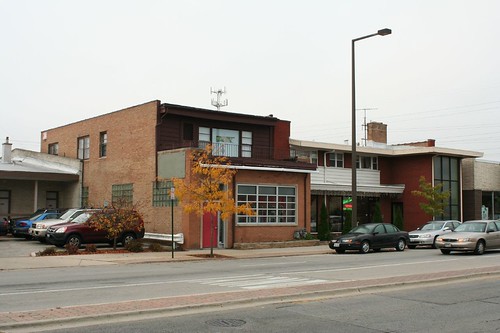
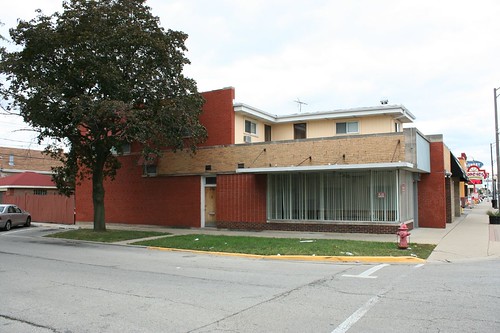
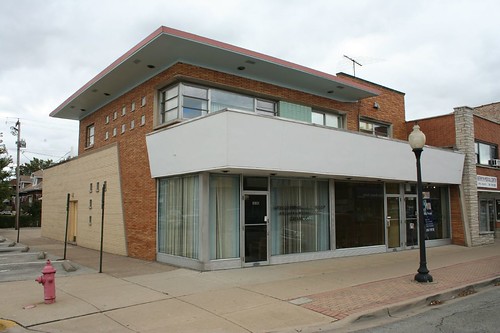
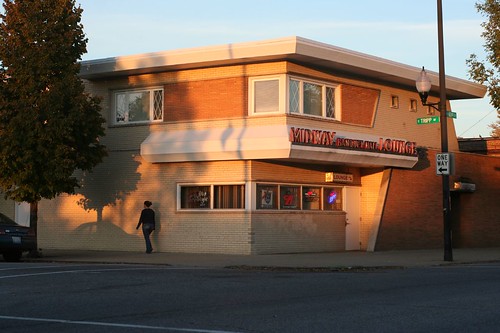
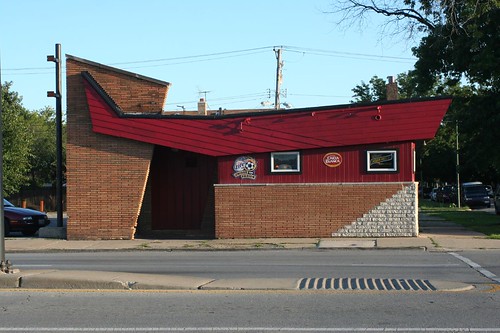
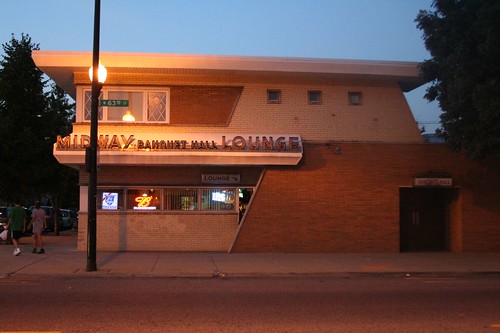
The most exciting ones share a similar design vocabulary of materials and style, with an emphasis on angles: angled brick wing walls, angled panels of Roman brick with limestone borders, angled wood roof overhangs.

IMG_7993
Cermak Avenue

IMG_6704
63rd Street - Midway Lounge

IMG_4594
63rd Street

You can find a crop of one-story, single use commercial buildings in the same neighborhoods that use the same design vocabulary, with angled sections of facade and roof overhangs, often trimmed in red wood or red Roman brick.

IMG_8886

IMG_8885

IMG_3426

IMG_4612a

IMG_3169

IMG_7902a

IMG_8958

IMG_8205

Thursday, June 3, 2010

Victims of the revolution

Bensenville

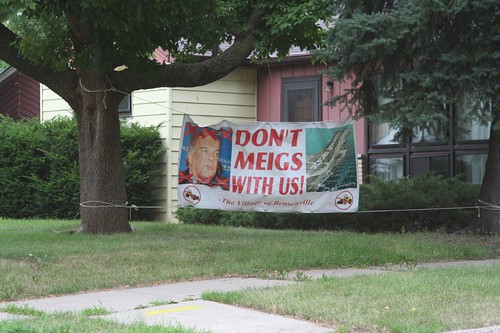
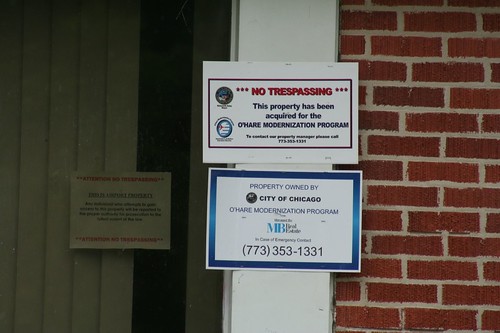
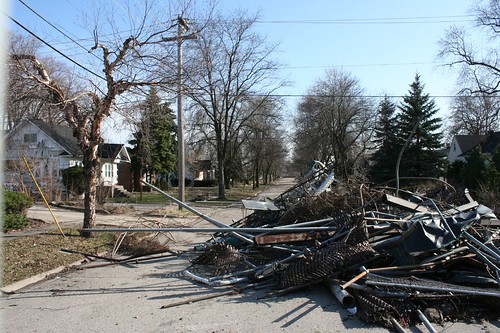
The behemoth that is O'Hare International Airport has been hungry for land. After a protracted legal battle, it seems its appetite will soon be satisfied, as a large chunk of suburban Bensonville is being torn down to make way for airport expansion.

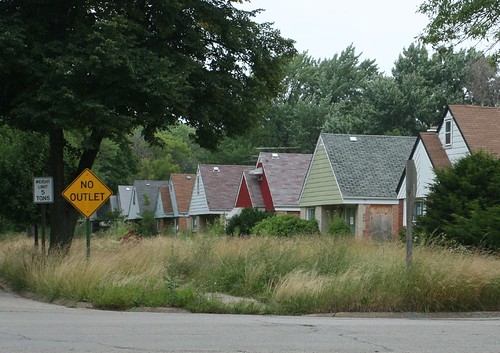
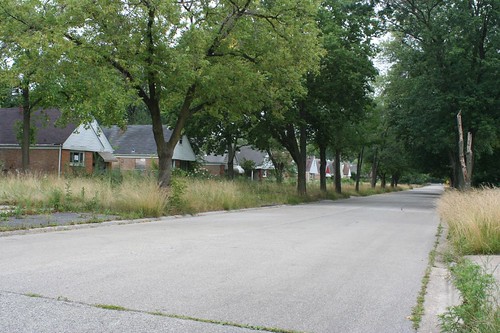
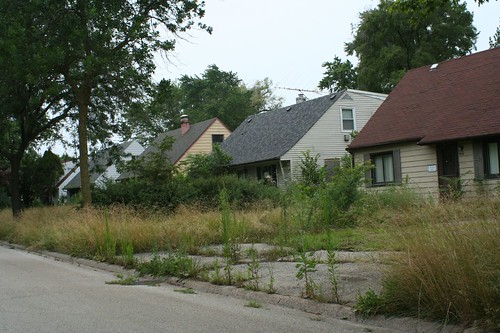
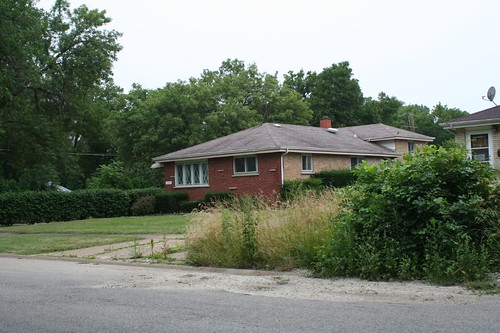
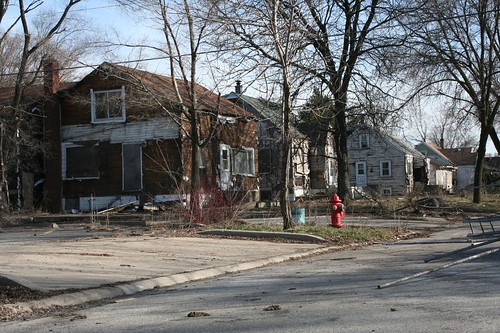
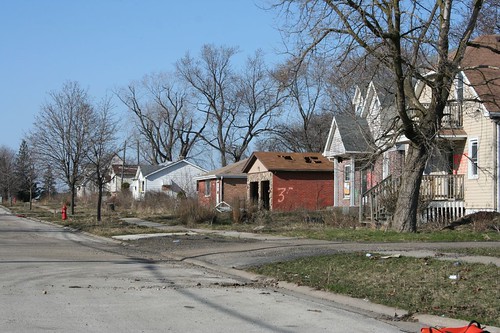
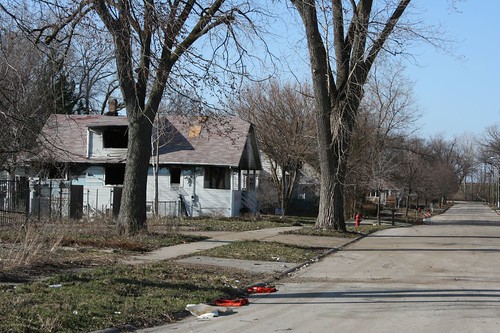
Dozens of homes are being sacrificed to appease the monster. I paid a visit to them last summer, at a point when perhaps 90% of the homes had been vacated, with only a handful of recalcitrant holdouts remaining. It was an eerie environment, with tidily kept yards and houses standing shoulder-to-shoulder with lots that were rapidly becoming overgrown.

IMG_1206

IMG_1203

IMG_1200

IMG_1213
A holdout next to a long-vacant house.

IMG_1201


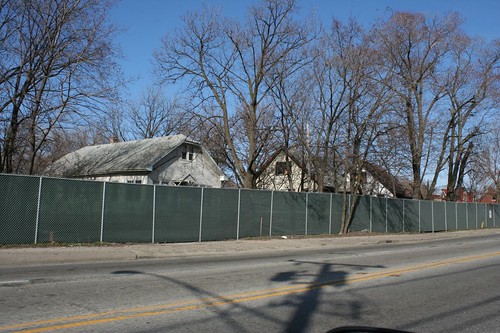
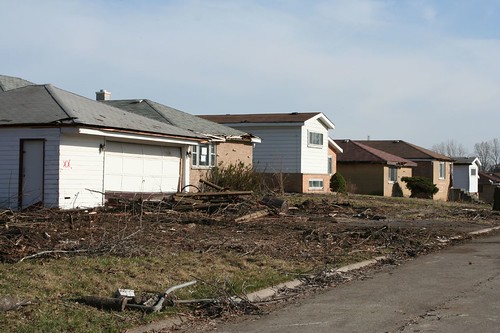
More recently I returned, and found that with the legal hurdles cleared and the holdouts gone, demolition of the entire area was underway. An entire neighborhood had been fenced off and was prepped for systematic destruction. Trees are down, fences are ripped out and piled in the street, grass has been stripped away, and the houses are looking pretty ragged.

IMG_2970

IMG_2966

IMG_2990

IMG_2981

IMG_2976

IMG_2988

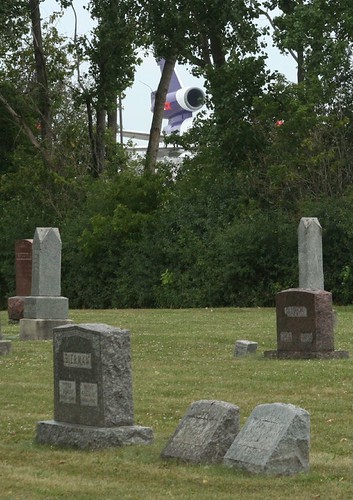
The other bizarre casualties of the expansion scheme are two cemeteries that have already been ingested by O'Hare. The two will have to be relocated, but for many months they have stood as untouched islands in a vast construction project.

Yes, that's a jet engine.

Thursday, May 13, 2010

A Lotta Terra Cotta

IMG_1879

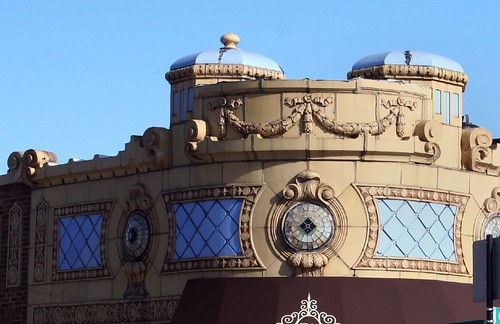
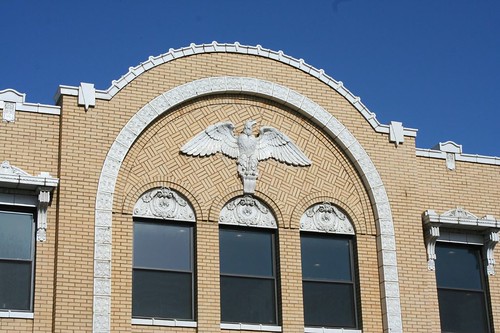
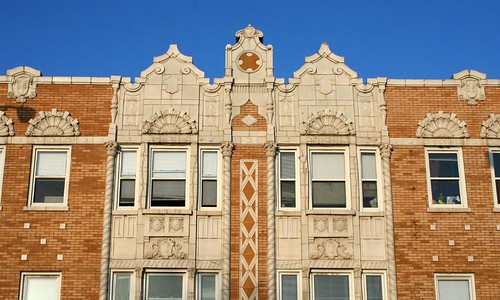
It was a random comment by a friend that made me realize concretely something that I was already dimly aware of: Andersonville is just loaded with great terra cotta. It is terra cottalectible. Terra cottalicious. It's terrificotta. It's terra cottacular. It's the place to go when you gotta terra cotta.

IMG_4172

IMG_3963a

IMG_4207

IMG_3960


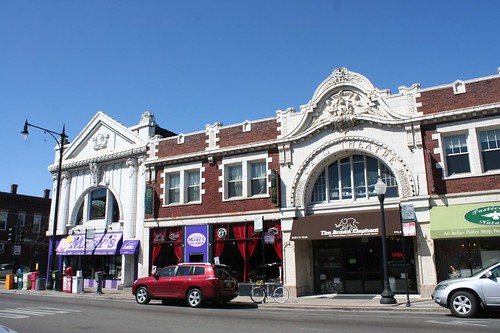
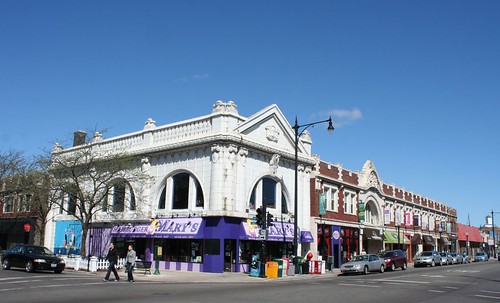
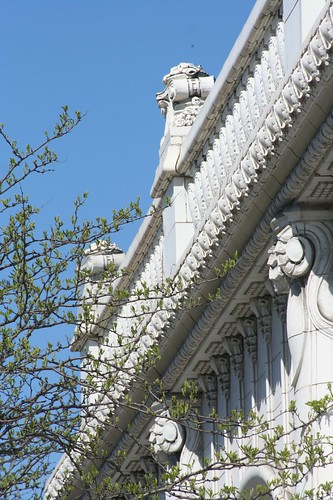
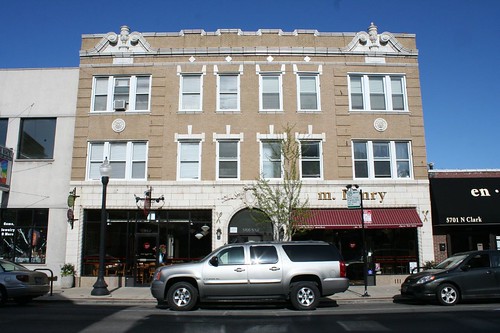
The king and queen of Clark Street are this pair, the former Swedish American Bank Building on the left, and the ex-Calo Theater at right.

IMG_4168

IMG_4187a

IMG_4185

IMG_4178

IMG_4173

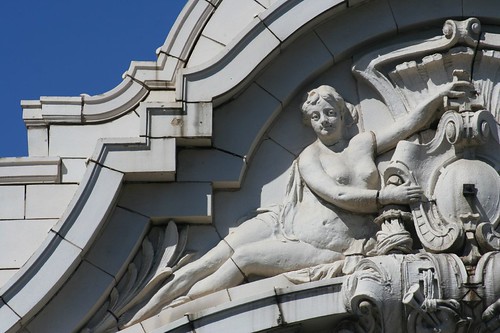
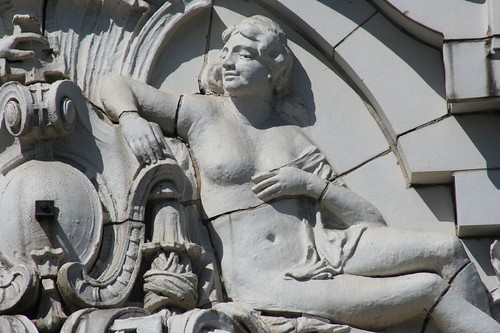
That last pic there is one of two mostly-nude maiden bedecking the Calo Theater facade. Their rather decadent leers take on a whole new meaning with Andersonville's ascendancy as a popular gay and lesbian destination.

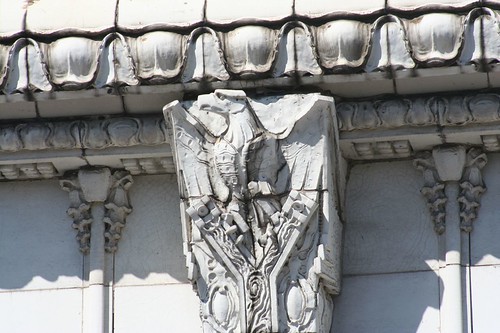
There's no shortage of lush ornament and no end to the variety of styles. Beaux Arts reigns, but Sullivanesque, Deco, and Classical are all represented.

IMG_7900

IMG_3952

IMG_3951

IMG_7910

If you're willing to stretch the definition of Andersonville a bit, you can pick up still more impressive buildings. Most people probably consider the neighborhood to end somewhere around Foster, but in architectural terms it essentially runs all the way down to Montrose, the continuity bolstered by several large and beautiful buildings.

IMG_4027a

IMG_7408

IMG_4019

IMG_4251

And remember our Egyptian car repair friend? He's located in this neighborhood too!
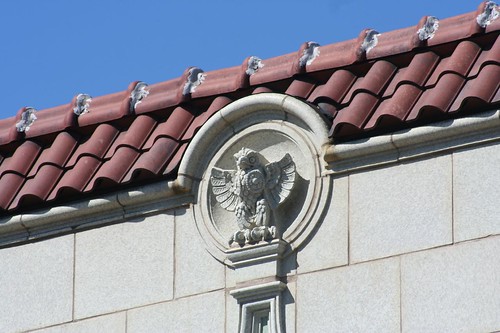
IMG_4221

Small wonder that Andersonville is on the National Register of Historic Places.